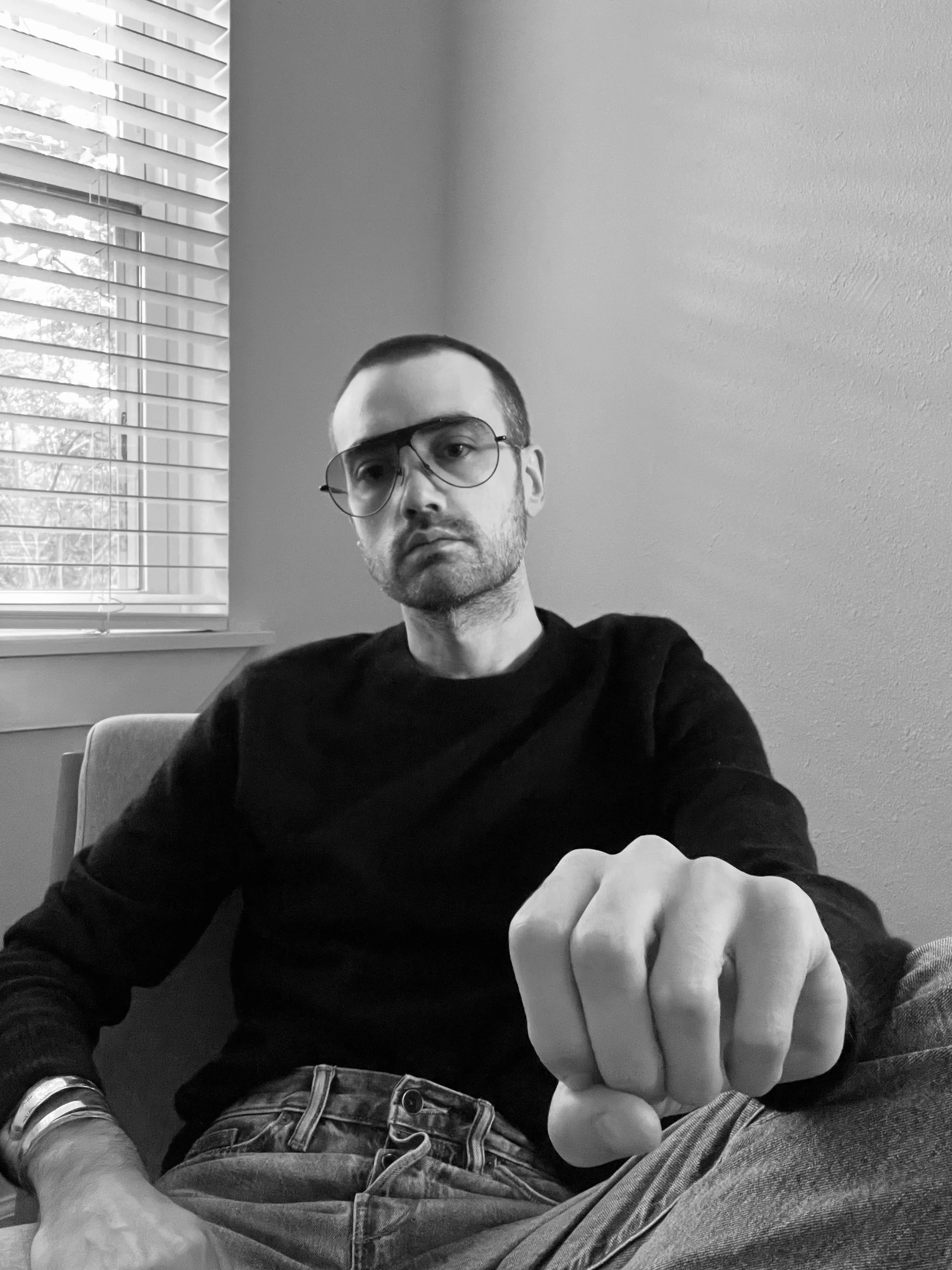
There’s a level where the difference between right and almost-right is the only thing that matters. That’s where I work. But it isn’t where I started, and it isn’t really the point. The point is what happens when it lands: when a room, a painting, the light at four o’clock, and the person standing in it all arrive at the same feeling at once. When it’s real, you don’t analyze it. You feel it.
I’m interested in how things speak to each other. How light shifts the temperature of a room. How one unexpected thing, a painting, a raw material, a sentence from someone who makes things for a living, makes everything around it make sense. I’ve spent my life learning how a place holds emotion, and how to build it so it holds the right one.
For a decade I was a curator and advisor at Crystal Bridges Museum of American Art. I curated the relocation and permanent reinstallation of Frank Lloyd Wright’s Bachman-Wilson House, directed architectural expansions and exhibitions, shaped the collection alongside some of the most significant architects and artists alive. That work taught me rigor: at that level there’s no hiding an almost.
That world pulled me into the private one. Collectors needed someone who understood not just what to acquire, but how art lives: how it breathes with a building, changes what a room means. One project led to another. Restaurants. Hotels. Private clubs. New builds beside the architects. The brief kept changing. What I was after never did.
Because I never stopped being a curator. I just stopped needing the museum to do it. Curation is a way of seeing: what deserves attention, what belongs beside what, what’s worth keeping. I practice it in rooms, in collections, in conversations with the people who make things, in the objects we live with—a chair, a lamp, a fork—all of them sites for invention. The art of how we live.
What I’m after is the meeting of two things that aren’t supposed to share a room: institutional rigor and real warmth. The museum taught me one. The art taught me the other. When they land together—precision you’d never notice and a feeling you can’t shake—that’s the triumph of the real thing.
About
PRESS
Arkansas Democrat-Gazette | High Profile: Dylan Chandler Turk
Whitewall | Kennedy Yanko Creates Copper Sculpture for Hennessy and Nas
Dezeen | Architecture at Home presents “Human-centred” housing prototypes
Interior Design | FODA and Hufft Collaborate on a Social Club in Bentonville, Arkansas
ArchDaily | Crystal Bridges Images the Future of Housing
The Architect’s Newspaper | Buckminster Fuller’s 50-foot Fly’s Eye Dome is coming to Crystal Bridges