Bachman-Wilson House
Curatorial, interpretive, and public-engagement direction. Crystal Bridges Museum of American Art. Opened to the public November 2015. Co-author of the Scala publication (2017).
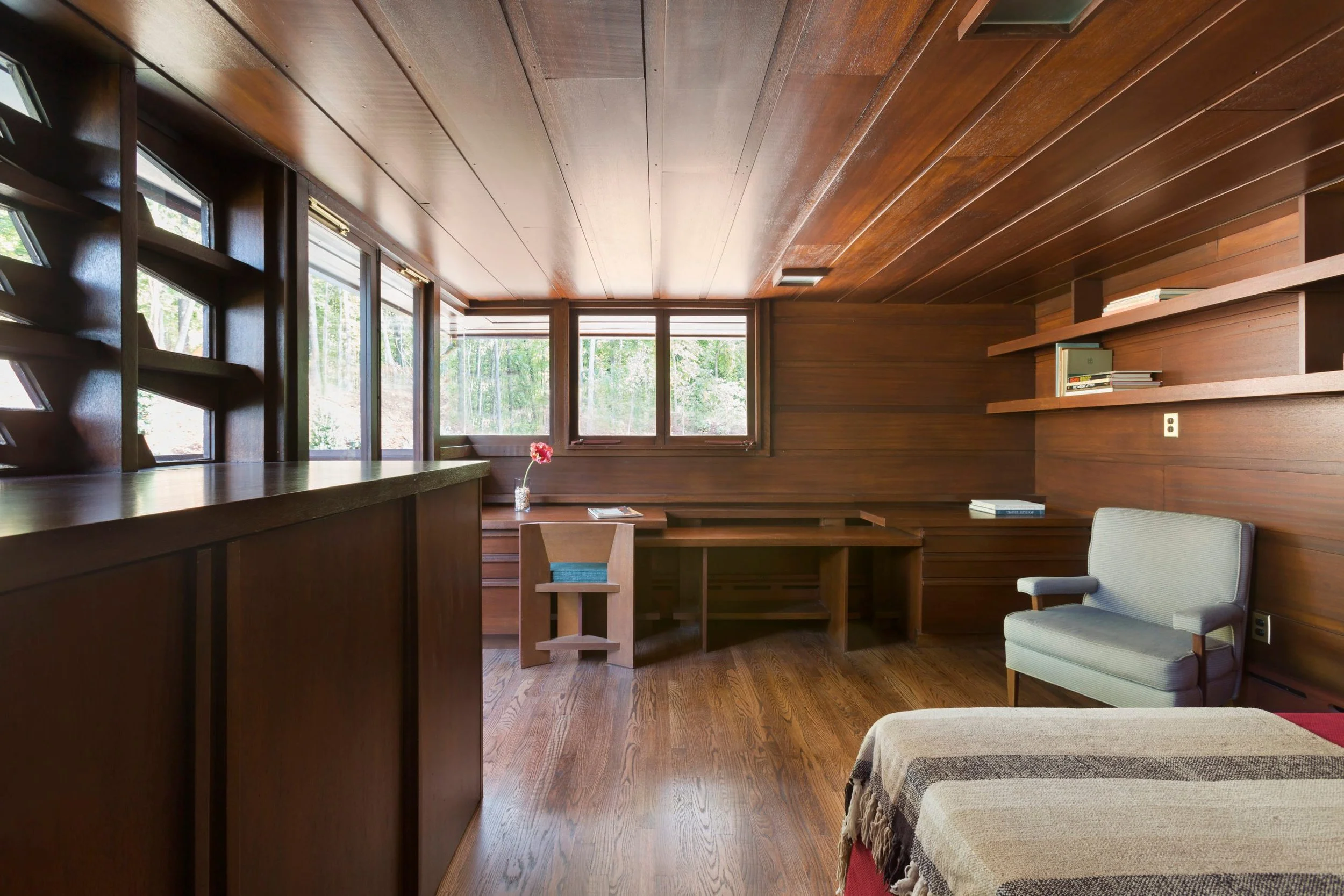
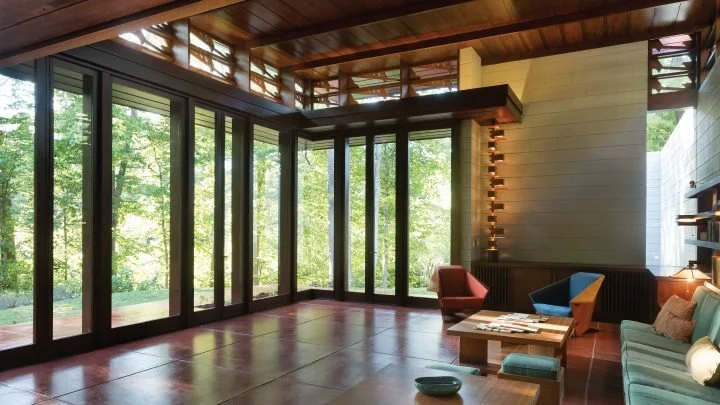
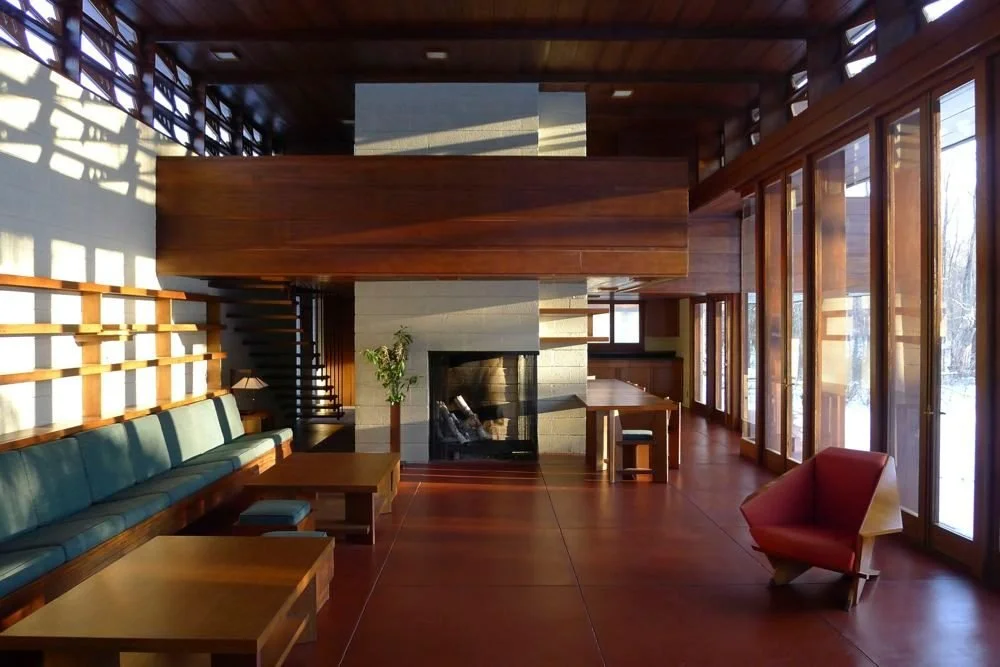
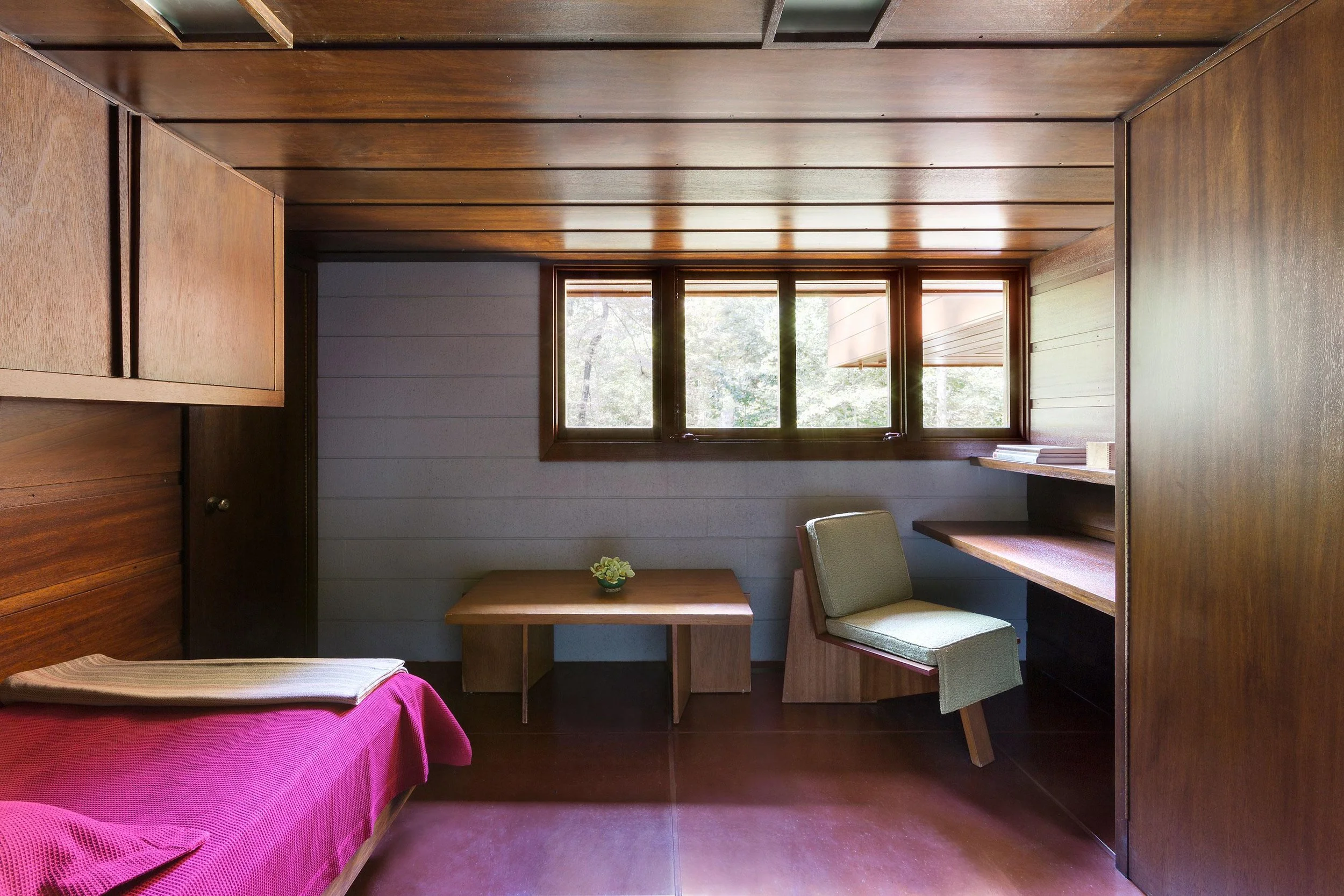
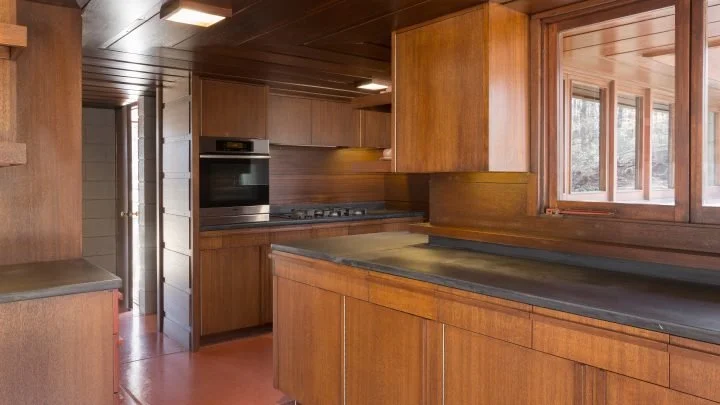
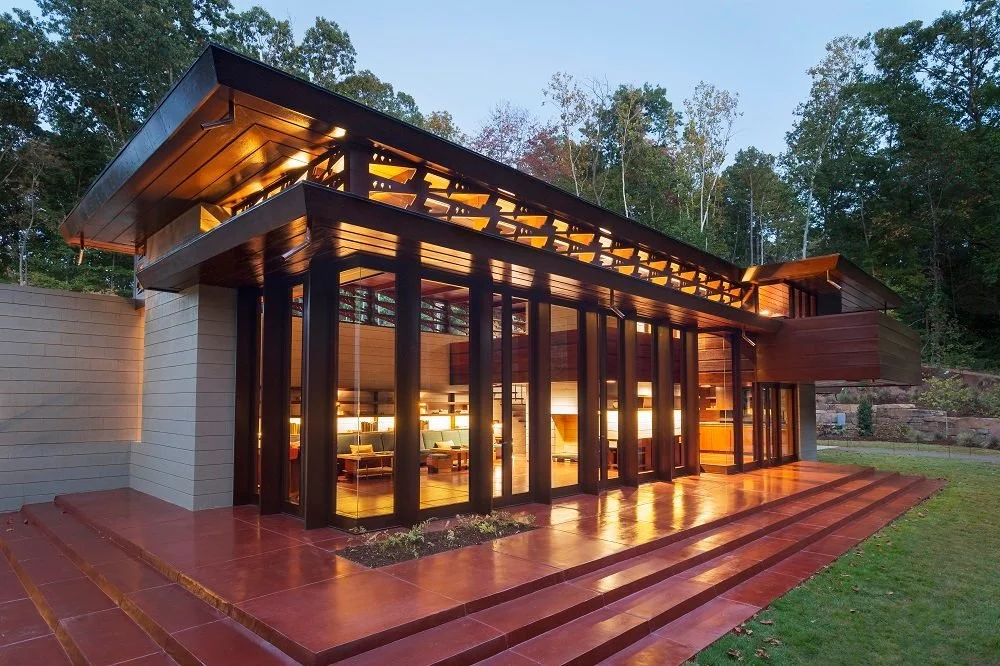
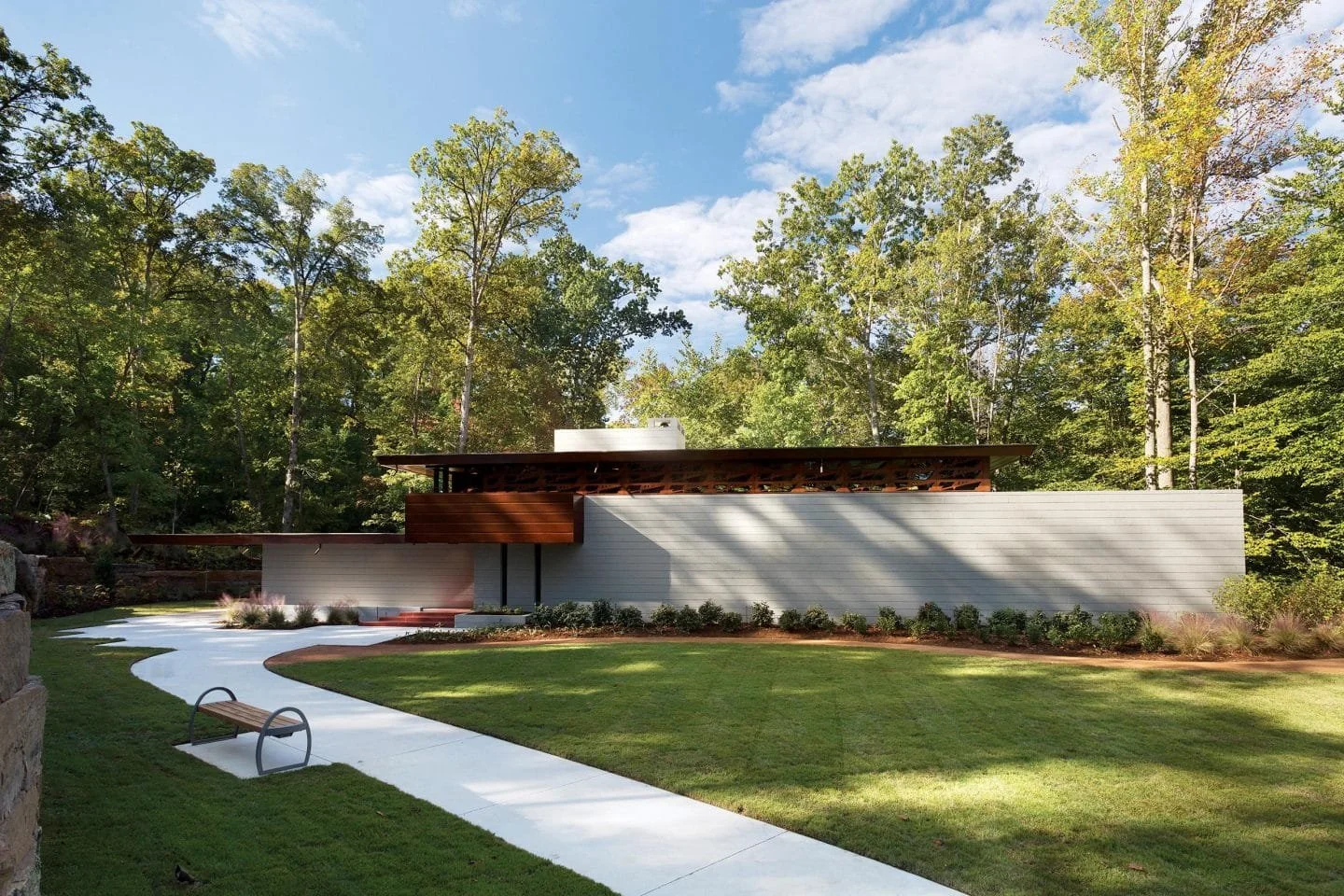
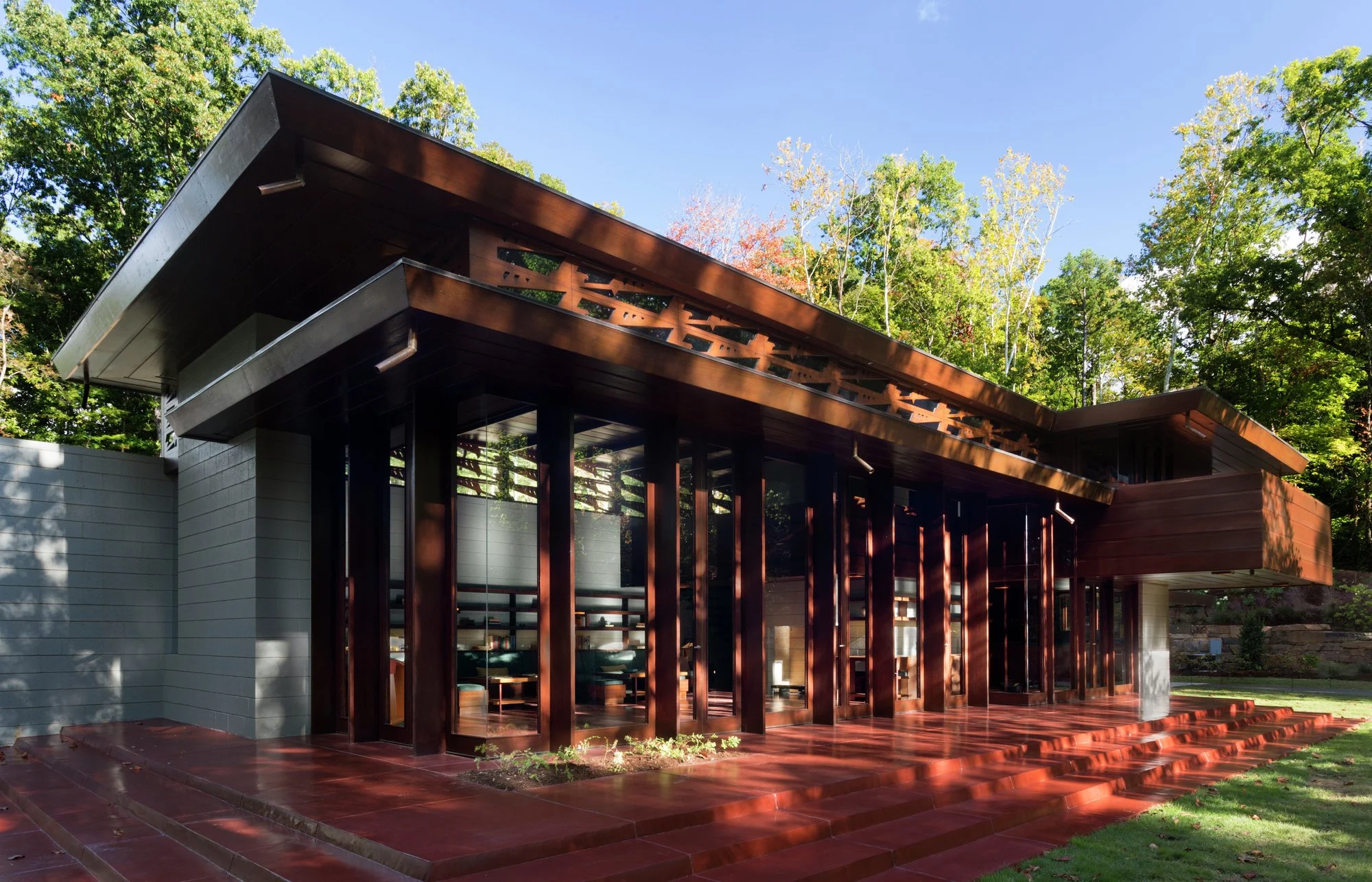
In 1954 Frank Lloyd Wright designed a small house for a couple in Millstone, New Jersey. Mahogany, glass, red concrete, built low to the ground so the line between the house and the trees almost disappears. Sixty years later the Millstone River kept flooding it, and Crystal Bridges made an extraordinary decision: buy the house, take it apart board by board, and rebuild it 1,400 miles away in the Ozark woods.
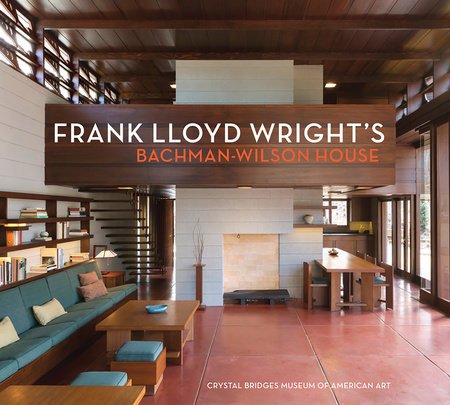
It was my first big project. I was 22. As curatorial lead I was responsible for how the public would meet the house: the curatorial vision, the staging, the educational materials, the whole framework for bringing an irreplaceable building back to life for people who had never heard of a Usonian. I co-wrote the book. I trained the guides. And then I toured people through it for years.
I wish I knew how many. Thousands. Fifth graders talking about space and light for the first time. Trustees from every major museum. Artists and architects I admired. People who had never been inside an architecturally considered house in their life. The woman who grew up in that house in New Jersey, standing in her childhood home in a state she’d never been to. Family that’s not here anymore. Oprah. Strangers I had soul-shaking human connections with and haven’t seen since. I’ve seen it in the rain, sweating through August, in fall when the trees fill with color and the pond goes deep winter blue. I remember the first time I walked through it. I don’t remember the last. Moshe Safdie sat in one of the Taliesin chairs.
The house has its own weight. The Bachman-Wilson family carried real heartbreak inside those walls, and pain is like a burn: once cleared it allows joy. Heart. Empathy. It’s just like people that way. The tour that stays with me most was a collector couple and their art advisor. It was fall, morning light, so perfect that I broke my own rule and invited everyone to sit on the sofa. We sat in silence, almost crying, and I told them why the house got built: a story of overcoming, of making art as a symbol for a life lost too early. We just bonded. We saw each other. The best tours happen when the art starts weaving the humanness of everyone in the room. That’s the job: getting the experience to be about the group, not just the facts.
That’s what the house taught me. How to see people. How to really listen to their stories, their lives, where they come from and what they carry. How to find the thread between a building and a life. It taught me about architecture too. But mostly it taught me about being human, and everything I’ve built since is downstream of that.