On My Mind
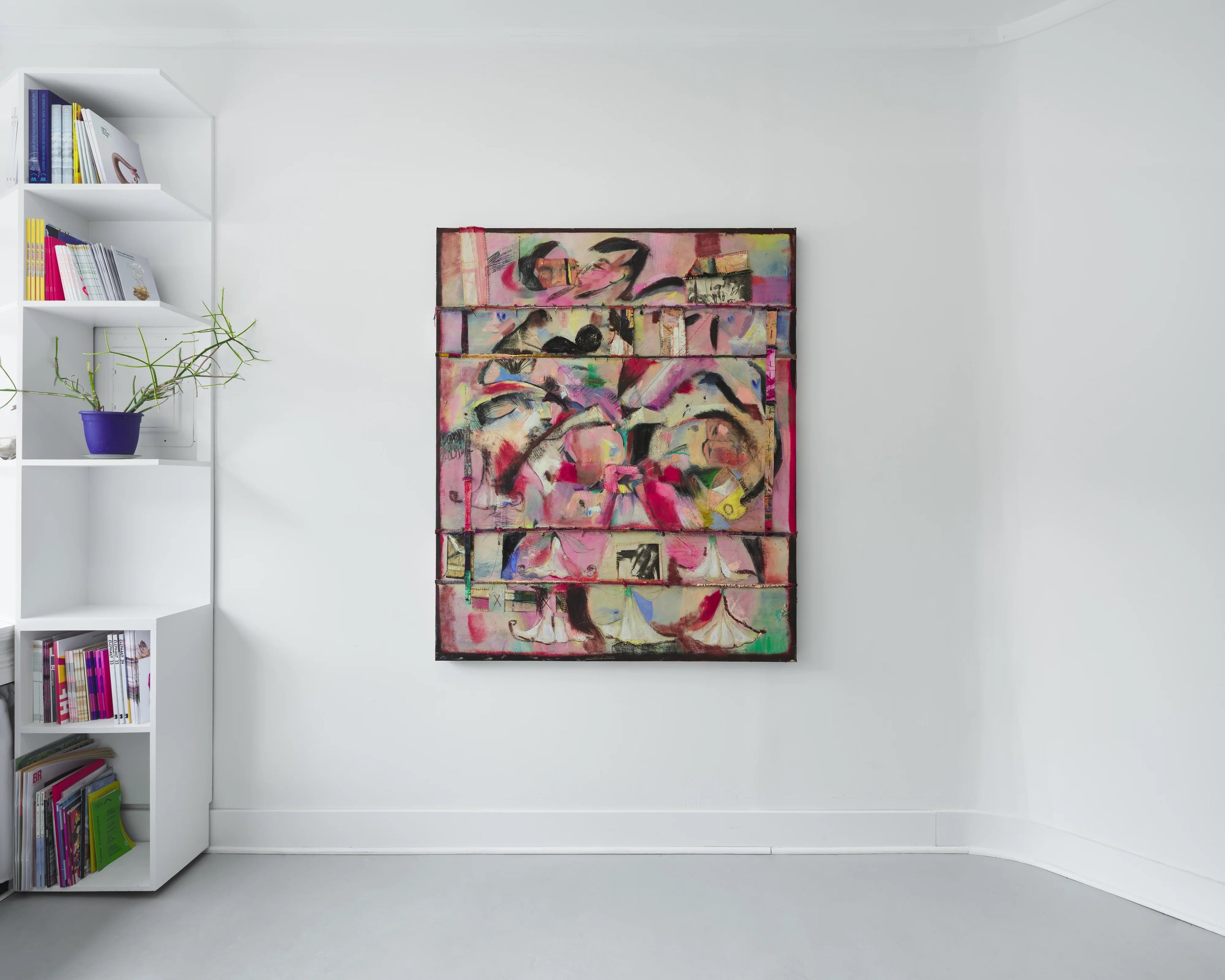
KATE BARBEE: THE BEAUTY IN THE MEND
Kate Barbee, Good Grief, 2026, oil paint, acrylic, sewn on patches, embroidery string, oil pastel, china marker, cold wax, 61 1/2 x 49 1/2 in; exhibited at MRS. Kate Barbee is an artist I’m so fond of.
I first saw her work at Michael Kohn Gallery in Los Angeles a few years ago. I find that I wake up thinking of paintings, and hers kept appearing. I couldn’t stop thinking about the figure, the texture, and the way she works: she makes a painting, cuts it apart, and stitches it into something else. Revision as forward motion. The cuts and seams stay visible, the mending becomes the soul of it all.
I’ve followed her since, and I’ve been lucky enough to acquire two of her pieces for a client. So I’ve watched this body of work up close, and I’ve watched her continue pushing, challenging her own past work, evolving, refusing to repeat herself. That’s the thing I admire most. She works hard, and it shows in every layer.
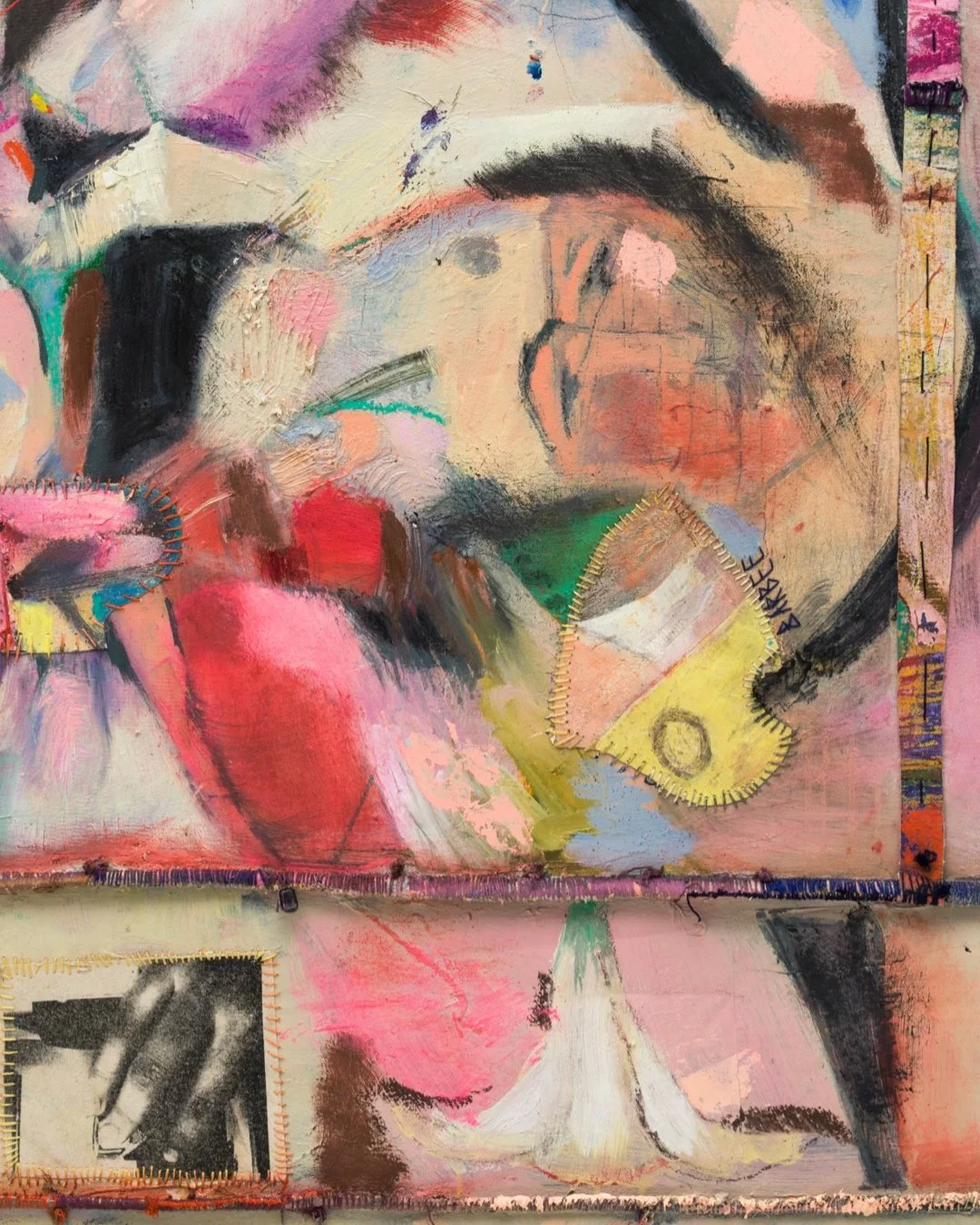
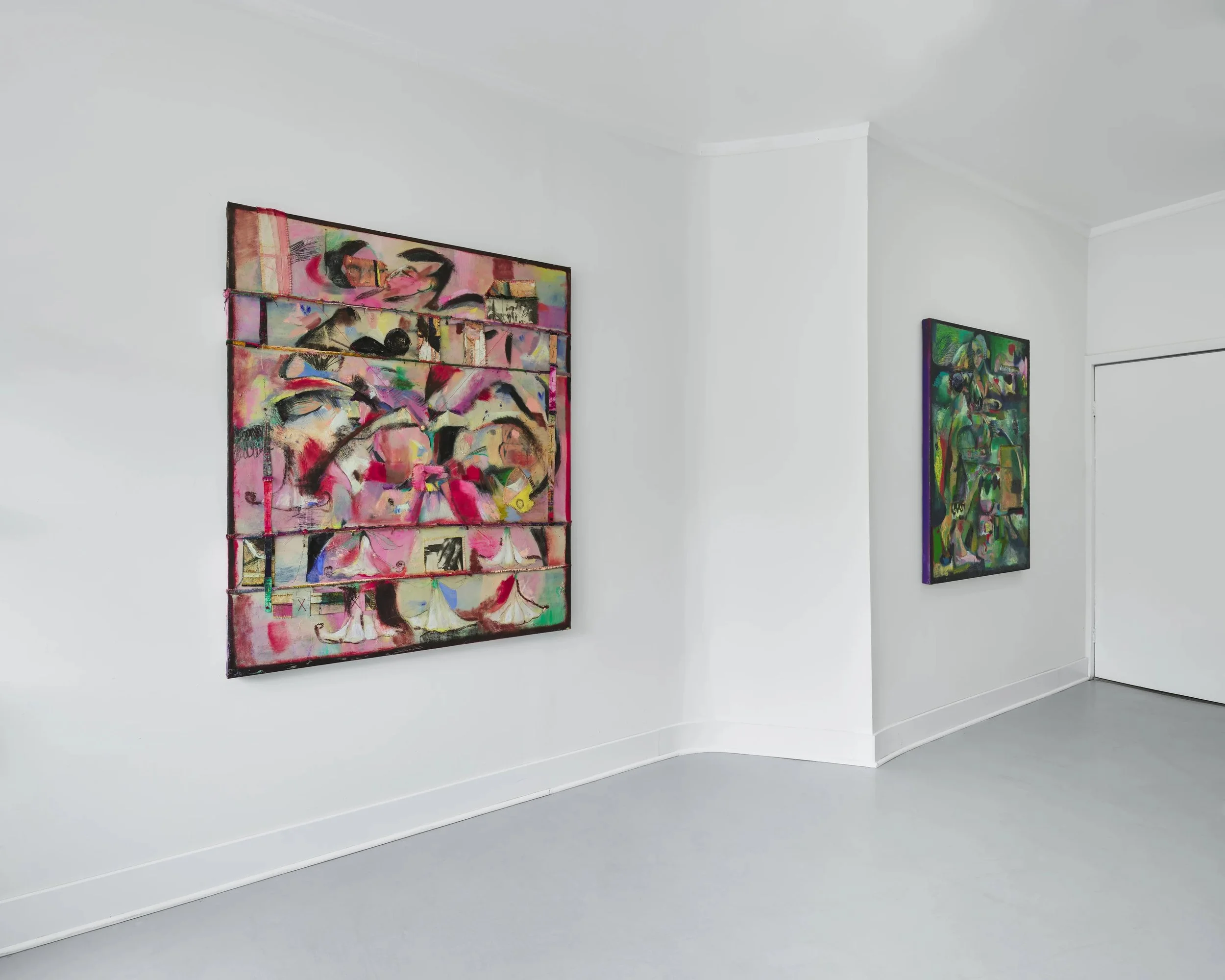
Detail of Good Grief.Good Grief and Nicotine Queen, 2026, oil paint, acrylic, sewn on patches, embroidery string, oil pastel, china marker, cold wax, bra insert, 52 x 40 in, on view at MRS.The work is an orchestration, it’s bigger than painting. Oil and pastel, yarn and embroidery thread, painted fabric—cycles of painting, cutting, sewing, and reconstruction. Barbee was born in Dallas and paints out of a studio in Queens, and this spring she opened Good Grief at Mrs., her first show with the gallery. It was really beautiful. She pulled the stitching even further forward, at times folding the canvas together to make ridges and seam lines you cannot miss, or running the thread straight across the top so it holds objects in its web. I keep coming back to the small subtle scene tucked inside the larger compositions, like patches of other memories and ideas, little lives stacking up into the bigger narrative. And there’s an old-world freedom to how she paints the body and faces of women. It feels familiar. But set inside her larger point of view, it reads as wildly contemporary.
This is what good painting does. It slows you down to the speed of looking, and it rewards you for staying. Barbee understands that a surface can hold time, that a thing made by hand carries the hours and the decisions and the grief that went into it, and that none of that announces itself quickly.
One of the two paintings I placed now anchors the living room of collectors who love history. The room holds French antiques gathered over years; the collection on the walls is resolutely contemporary. Her painting became the bridge, the piece that unites the story of the room, really the story of the people who live there. A portrait carrying its own history of cuts and repairs. That’s what her work can do in your life—help you see the beauty in the mend.
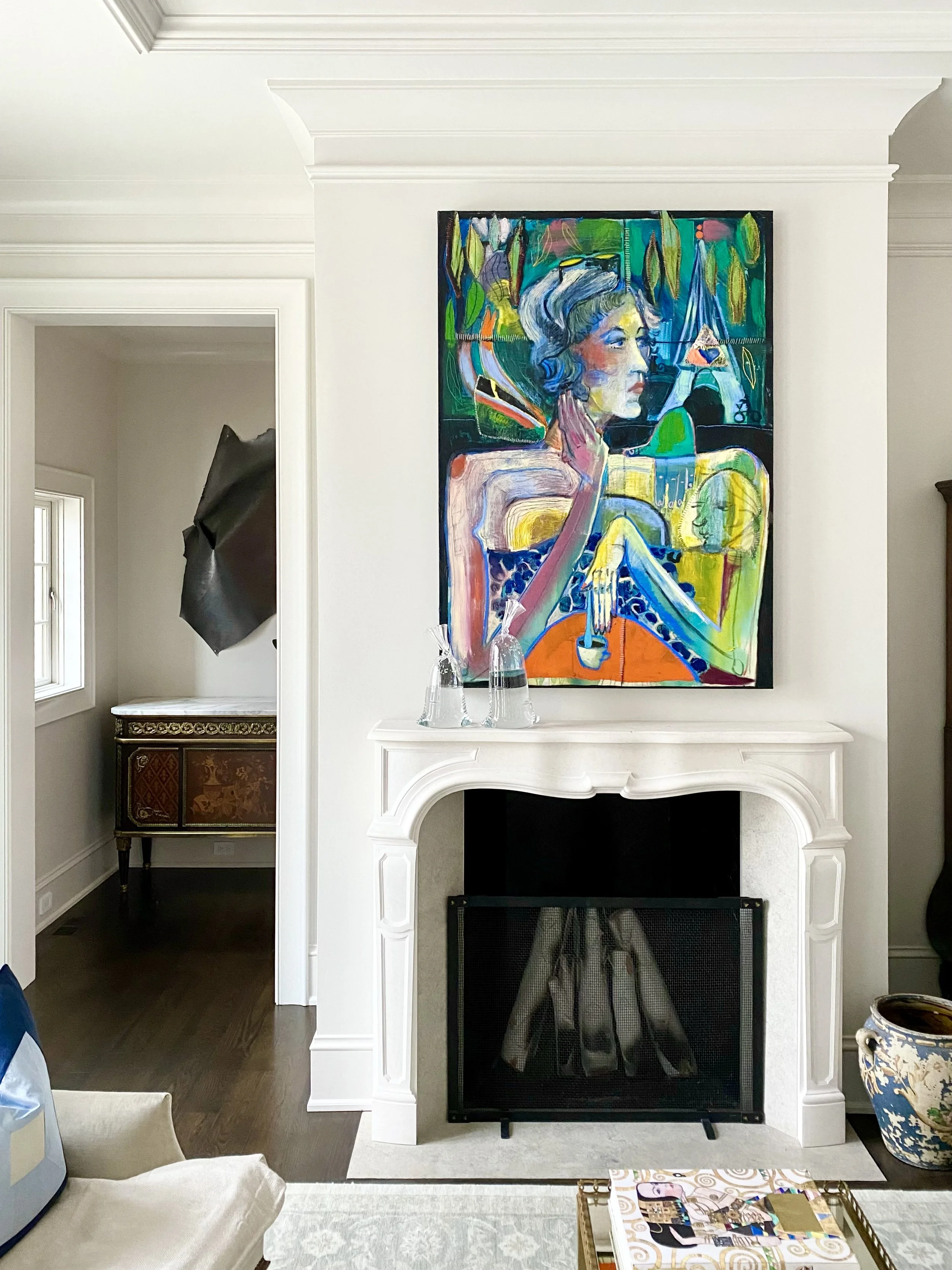
Brett, 2020, oil paint, cold wax, quilted pieces, embroidery sting, oil pastels, 60 x 42 in, Private collectionPainting is not like the romanic novels of artists working in the lofts of our imaginations. It is complex, hard work, met with self-doubt and questions about the truth of it all. Joan Mitchell is often quoted saying the hardest part of painting was knowing when to stop—to see the moment and trust it, because over refinement can kill the organic truth. Some practices are intellectual, built on precision and thesis. Some unpack an idea or a historic event or the feeling of a place. Barbee’s feels deeply personal. I haven’t asked her. But the cutting and sewing reads like an act of taking who she is—who we are—and looking at it from different angles. Maybe the parts of us that feel complicated, traumatized, whatever we’re carrying, don’t need to be hidden. Maybe they need to be cut, and stitched into a different part of who we are, to make something beautiful. I think that’s really what life is, isn’t it.
So the finished painting holds the scars, the removals, the seams, the thread pulling it all together, and that matters as much as the figure or the scene dominating the composition. The rehabilitation of a worn, discarded canvas is what makes the truth of it real.
It’s not a fast hit. It’s a slow burn, and it builds. I’ve spent time with these paintings across different seasons and changes of light, and each time I feel closer to them. I find myself wanting to know more about a single tear line, about the hidden layers of what’s actually there underneath.