On My Mind
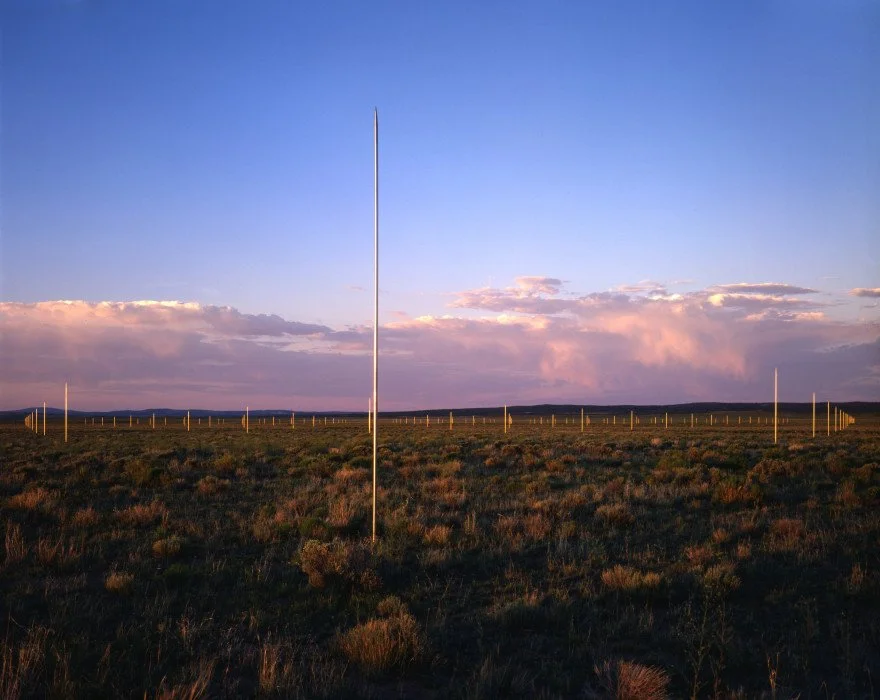
WALTER DE MARIA’S LIGHTNING FIELD
I must have learned about it in a dark classroom in the Edward Durell Stone building, somewhere in the long run of slides that is an art history education: Walter De Maria’s The Lightning Field, 1977. Four hundred stainless steel poles in the high desert of western New Mexico, laid out in a grid one mile by one kilometer. Waiting on weather.
It keeps coming up in my life. It’s one of the pilgrimage sites we all talk about—Marfa, Roden Crater, Spiral Jetty, the Sun Tunnels, the Earth Room. Its from that moment when everything we do to the land, define it, conquer it, run from it, manipulate it, capture it, became a way of making art we haven’t seen since.
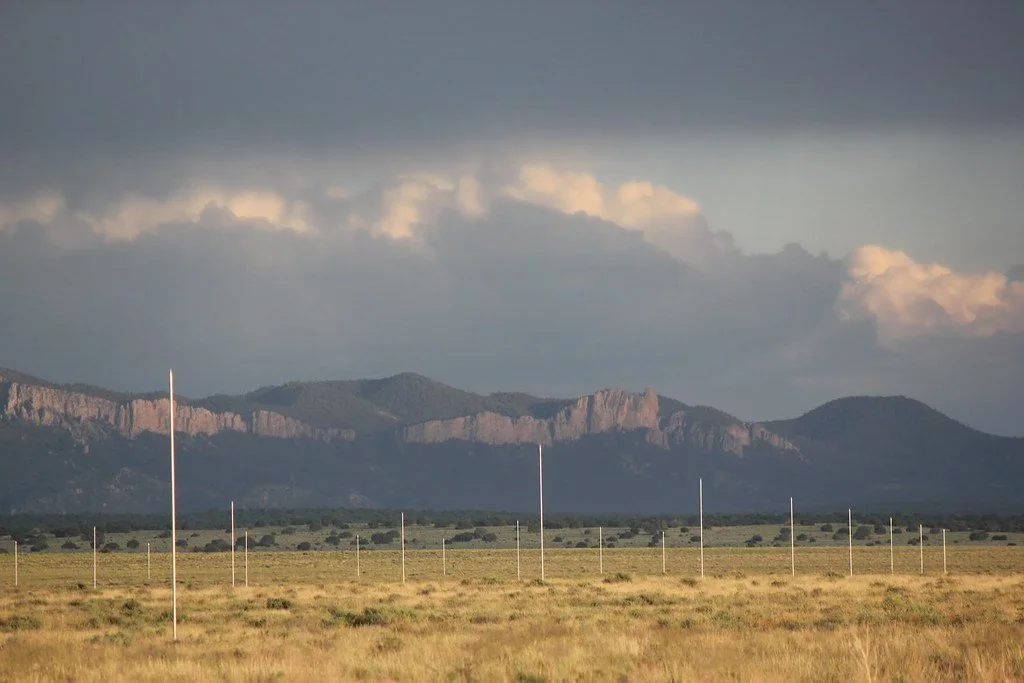
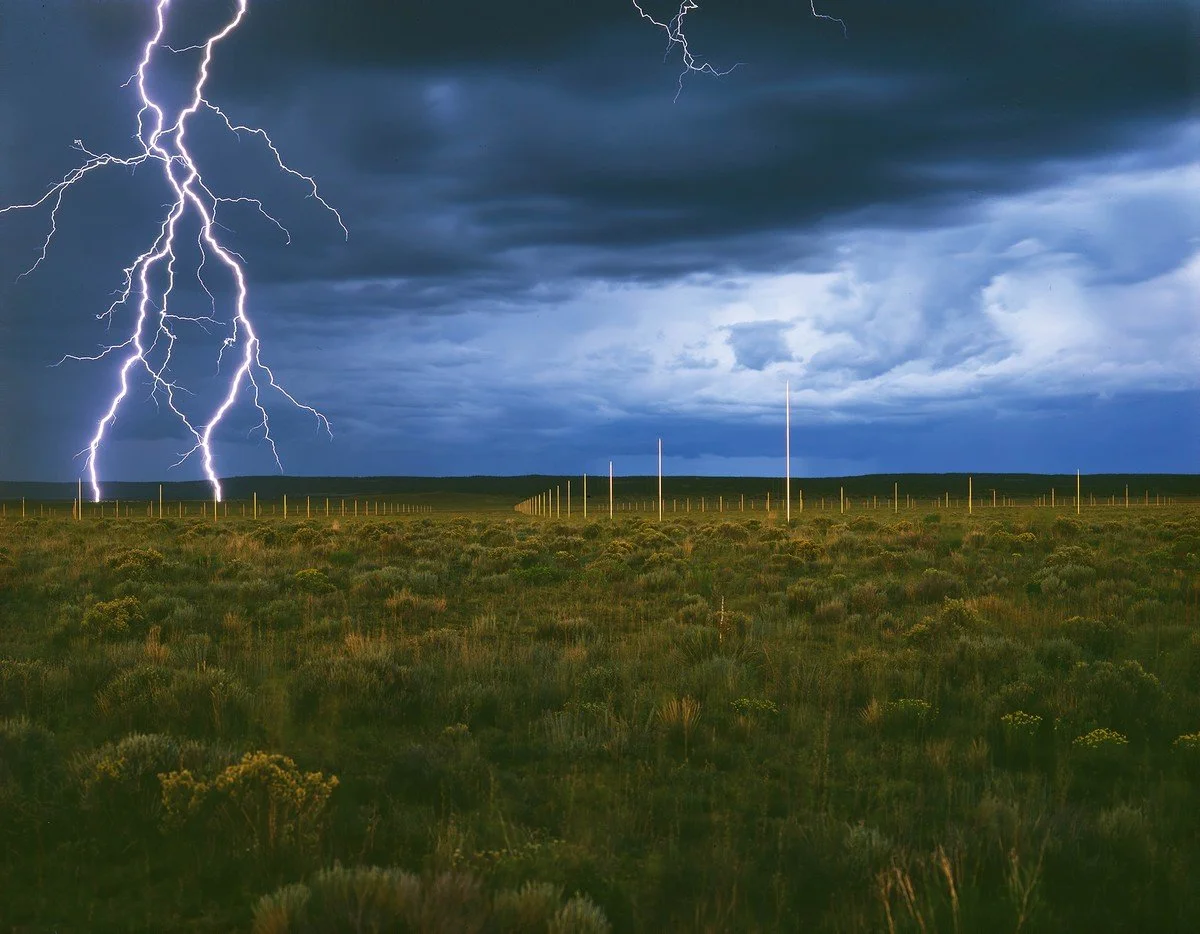
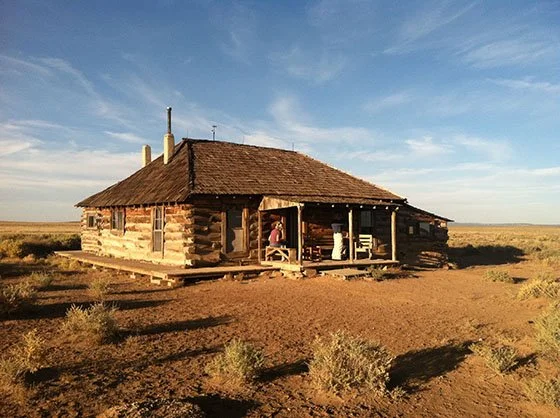
And you can’t just go. That’s the first thing I tell people. You meet at Dia’s office in Quemado and they drive you forty-five minutes into nothing, to a homestead cabin older than the sculpture itself. Six people a night, May through October. No wifi, barely a signal. And despite the name, lightning rarely comes. Dia tells you that upfront. So you sit. You watch the poles vanish and reappear as the sun drops, four hundred of them, no two the same height, each cut so their tips form a perfectly level plane floating above the uneven ground. De Maria wrote that the land is not the setting for the work but a part of the work. So is the waiting. But maybe it’s not waiting.
The Southwest is a refuge for me. For generations it’s where my family has gone to hide, to find ourselves, to be reminded that the world is so much bigger an that the people who came before us hold anchors through time and place. Sharp mountains fall into high deserts. Clouds appear like distant calls from a lost loved one. The earth almost beats with the rhythm of wild horses. There has always been an adventure in me to get in the car and drive for days into a place the world forgot, just to see it. To feel what it feels like there. To hold reverence over a place rather than a people.
That’s what these earthworks understand. They place reverence on the world. They make sitting, waiting, watching, and listening into the performance itself—and that lands harder now than it did in the seventies, in a world obsessed with the plan, the program, the point handed to us in digestible bullets. I wonder whether it takes a massive ego or no ego at all to build a monument in the middle of nowhere for only the few and the adventurous. Maybe both. Either way, almost fifty years on, it is still standing in that field, still cared for, still asking.
I’ve never tried to book it. That’s deliberate. Some pilgrimages you save until you’re ready to be changed by them. But its always at the back of my mind. It’s one of the voices begging me to find refuge away from the noice, reminding me that life isn’t a competitor that I have to keep up with.