CHANDLER
the interviews
I Hope for Crown Molding: A Conversation with Kate Barbee
A painter who finds her freedom in disruption, a quilting class, and a community that echos delusion until it becomes a prayer.
by Dylan Chandler Turk
October 4, 2026
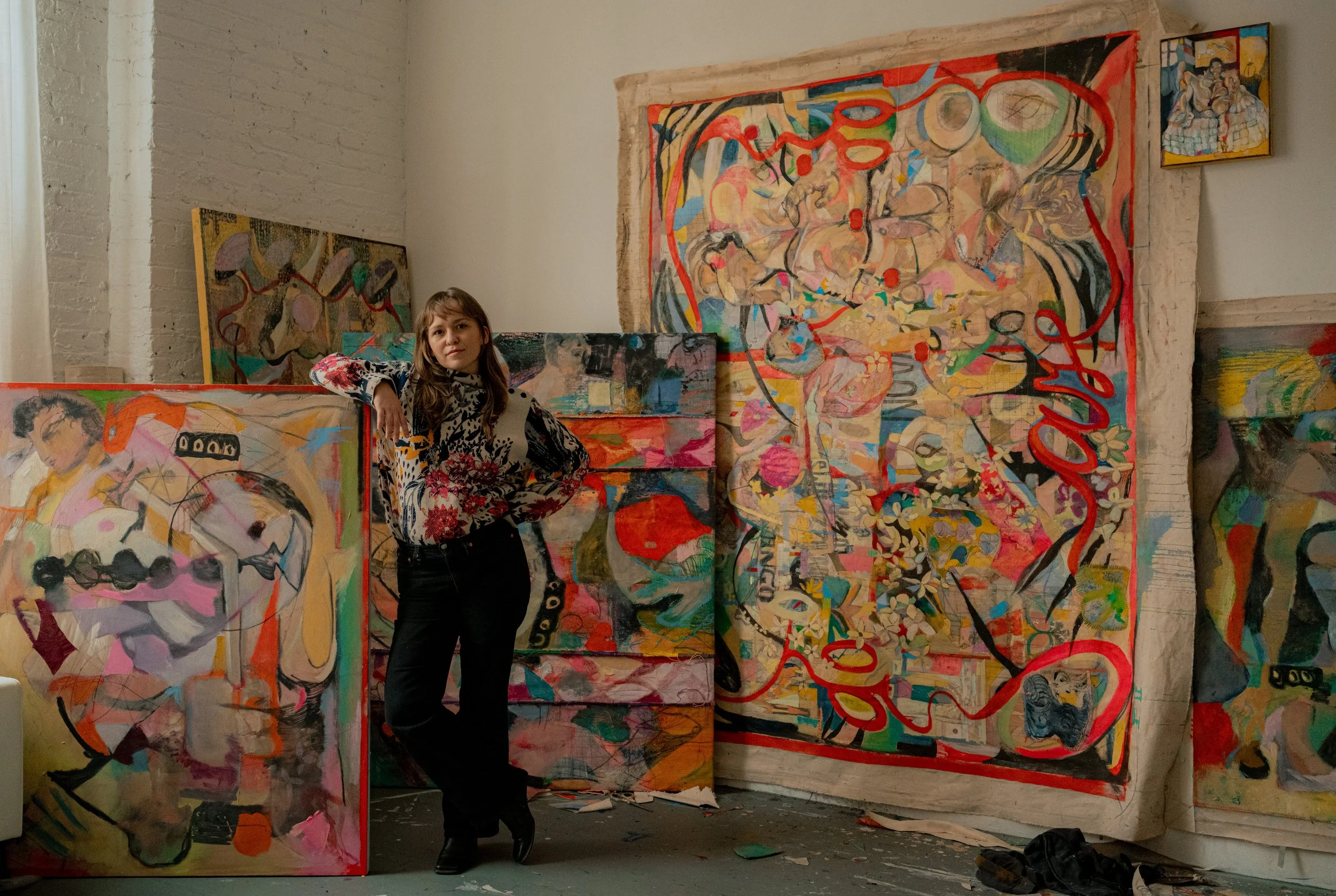
Photo by Peter McCain
Austin-colored sun rays pour into the glass box of a house I sit in. Over the speakerphone, Kate Barbee’s Texas drawl is soft. Her cadence is an uneven rhythm, more like a heartbeat, the sound of a needle irregularly going in and out of canvas. She’s from Texas, so there is something about her voice that belongs in this light.
I first saw her paintings when she was showing with Kohn Gallery in LA in 2021. I’d never seen work like hers. It felt so ancient, so enmeshed in everything that came before. The smokiness, the atmosphere, the freedom of composing beauty and story on a painted surface. One of my favorite architectural terms is enfilade. It is the beautiful and dramatic act of composing thresholds on an axis, so the sightline through the punctuation of the rooms goes uninterrupted, the frames of the thresholds repeat themselves ahead of you, and the glimpses of the rooms become a story that you cannot fully see, but know is coming. It’s grand. It’s cinematic. It’s often covered in crown molding. The word enfilade means threading, or putting on a string. The independent unite when the string pulls through them providing order.
Kate Barbee’s paintings have something like that. They are so narrative and organic, but the structure of the thread becomes the central story arc, connecting seemingly disparate moments and actions and gestures and marks in a shared breath. That is the humanness. That is her. She paints like she tells her stories. Like a southerner sitting right in front of you, open, requiring very little, yet willing to give so much.
Ever since we spoke a few weeks ago, I keep picturing her and her friends, sitting in someone’s studio. Paintings everywhere. The smell of cigarettes and weed and turpentine and glue. Sunlight caught in the smoke as it billows up to the high ceiling. Laughter. Encouragement. Love. She told me this community is the thing that inspires her right now. Not just because she is lucky to be surrounded by so much talent, but because they all cast light on each other. They echo the dreams and feelings we may tell ourselves are delusion, when in reality it’s simply who we are. They ennoble each other’s delusion until it becomes truth.
Isn’t that the best thing you’ve ever heard?
The thing that gives me hope, that keeps me going, is people like Kate. She showed me a glimpse into a life of an artist that reminds me of our collective humanness.
I wish I could show you more. I wish you could hear the sound of her voice and the care that pours out of it. I wish you could sit in front of one of her paintings today. Maybe you can.
What I can tell you is that whatever headline you read about the art economy, what is next, who’s who, and what is really happening out there is false. The truth is that, like every era before this one, artists are making, talking, smoking, laughing, thinking, and articulating what it means to be alive right now. That is happening, and it is kind of all that matters. The story is in the studios. It always has been. The story is the people who put it out there, chop it up, recontextualize it, stitch it into something else, and have the courage to put it on a wall in a room in front of people to be consumed. A cost that can feel like saying goodbye to pieces of themselves they may never see again.
That is the art world I love. I dream about. It is thriving.
Kate grew up in Texas and studied art at the University of Texas. She has shown work with Kohn Gallery in Los Angeles. Her first show with Mrs., Good Grief, ran May 9 to June 27, 2026, in Maspeth, Queens. Her studio is in New York.
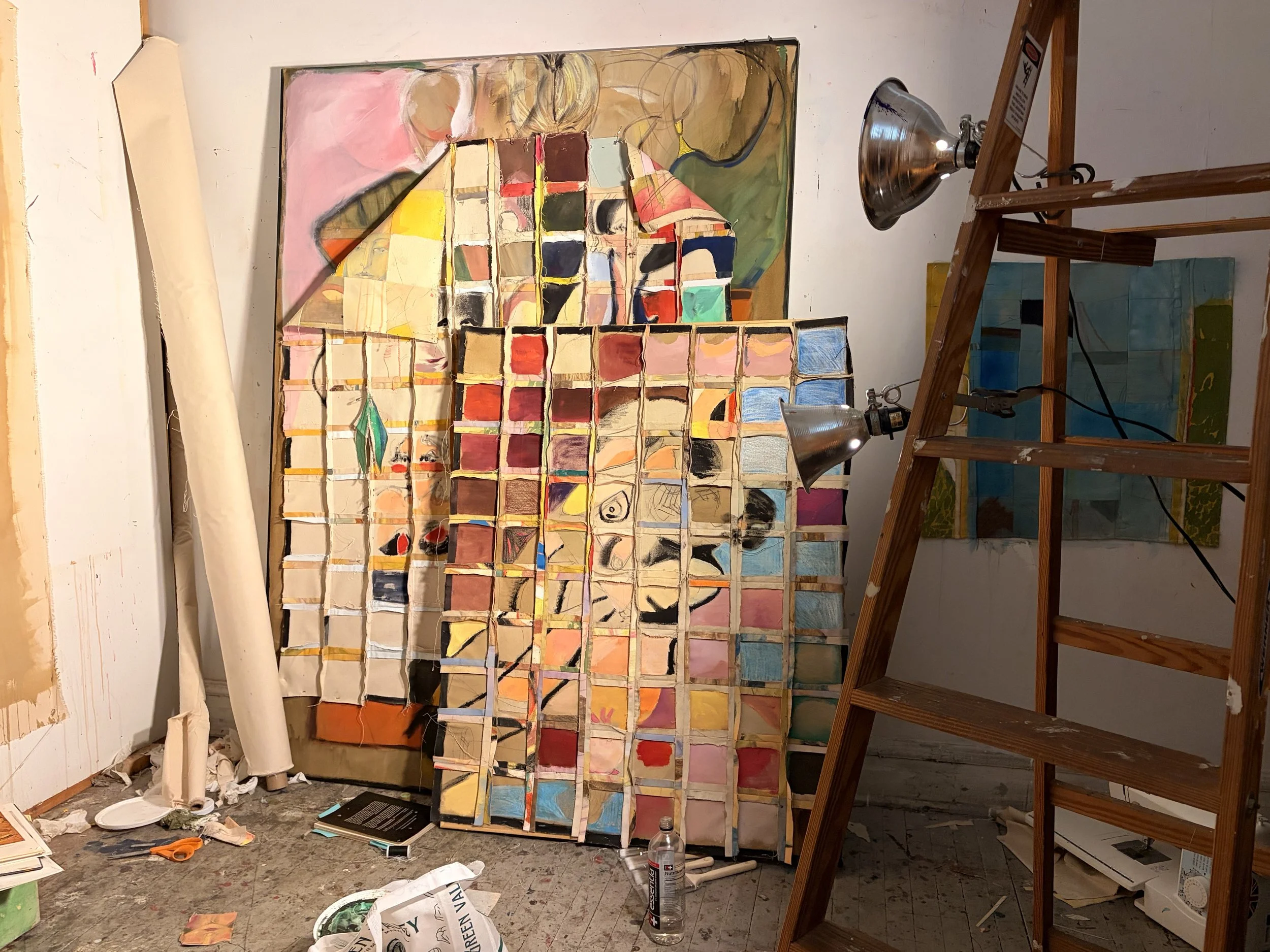
I ask everyone I interview for photographs from their own life around the time we talk. Studio photos are by Kate Barbee.
TURK: How are you doing? How are you feeling?
BARBEE: I'm doing good. I always get a little nervous answering questions about my art. But I'm feeling good.
TURK: It's weird to talk to you, because I've been obsessed with your work for so long that I feel like I know you, but I don't. I just know your art. These paintings, oh, you made them. So I just kind of want to know: how do you do it? And what does that feel like? How did you first start thinking about stitches becoming a mark?
BARBEE: There wasn't just one big moment. I grew up with my grandparents being antique collectors, and they had a little antique shop in Longview, Texas. So they just always had the coolest little folk art things hanging around their house. And one of the things that I will never forget was this quilt in their guest room. They hung it on these little bitty clothespins on this tiny little shelf that also held all these knickknacks.
I would go into that guest room and lie on the bed and look up at the quilt. It was this really great quilt. There were these little embroideries of children playing, or these little symbols, and I would touch it. I think that was kind of a moment where... I don't know if I realized that would play into my work later on. I didn't even know I'd be an artist at that point in my life. But it was one of those things that really stuck with me.
Then much later on, of course, I started doing the stitching with the jackets, and the punk scene in Denton and Dallas. I learned how to embroider when I was homeschooled. My mom homeschooled me from third grade to fifth grade, and to keep us socialized there was this Christian homeschool group that would happen every Friday. All of the moms would have their own little classes, and people would basically trade skills.
The first thing I ever made was this little piece of hoop art. It was a red cardinal, and it was cross-stitched. That was kind of the only stitch I learned how to make. And that skill led into the punk jackets.
Then once I started painting pretty big at UT, I was buying this drop cloth canvas. In the drop cloth canvas at Home Depot, they have the seam that sews two pieces together. It was very satisfying. One of my professors came up to me and said, I really like that you sewed these two pieces of canvas together. And I’m like, well, I didn't. This is just how I bought the piece of canvas. So it was at that moment, where I was working around this seam, that I realized I need to add more of this into my paintings. And that's kind of the full story of the string.
TURK: I love that idea of something you're working around, and then you realize it's actually something you need to lean into and embrace. That's kind of beautiful. Tell me what that feels like in your practice, when you've been working in one way and you realize a shift needs to be made.
BARBEE: It's kind of a tricky balance. Because there's self-doubt involved, and then there's also this pure excitement and impulsiveness that, I think, almost overrides the self-doubt. I just recently made this painting, and it was these two people, and it was really beautiful, and I really loved the texture of it. Then I was like, I don't feel connected to the subject matter anymore. And I just chopped it all up.
TURK: (laughs)
BARBEE: There's this magical feeling of just knowing that everything is not permanent. Accepting that is very therapeutic to me. I used to be caught up in this idea of: I only have this amount of supplies, so I must make the best painting ever. That was a lot of pressure to put on myself. I think a lot of painters feel this way. I realized that I can just chop it up and make it into something new, when I get bored of it. There's a freedom there.
TURK: How does that interact with who you are? Do you practice that as a person, too, the magic of impermanence?
BARBEE: My practice is where I can honor the freedom that I want in my life. I cannot get caught up in what people want to see from my work. This is the one place in this world, that is so hard sometimes to navigate, that I can explore that type of freedom and that type of letting go of things. I do try to take it a little bit into my relationships, and the way I understand people, or empathize with people.
TURK: The studio is kind of a fantasy world that you get to write the rules for. You cross this threshold into a sacred space where you get to be free.
BARBEE: Yes. Definitely.
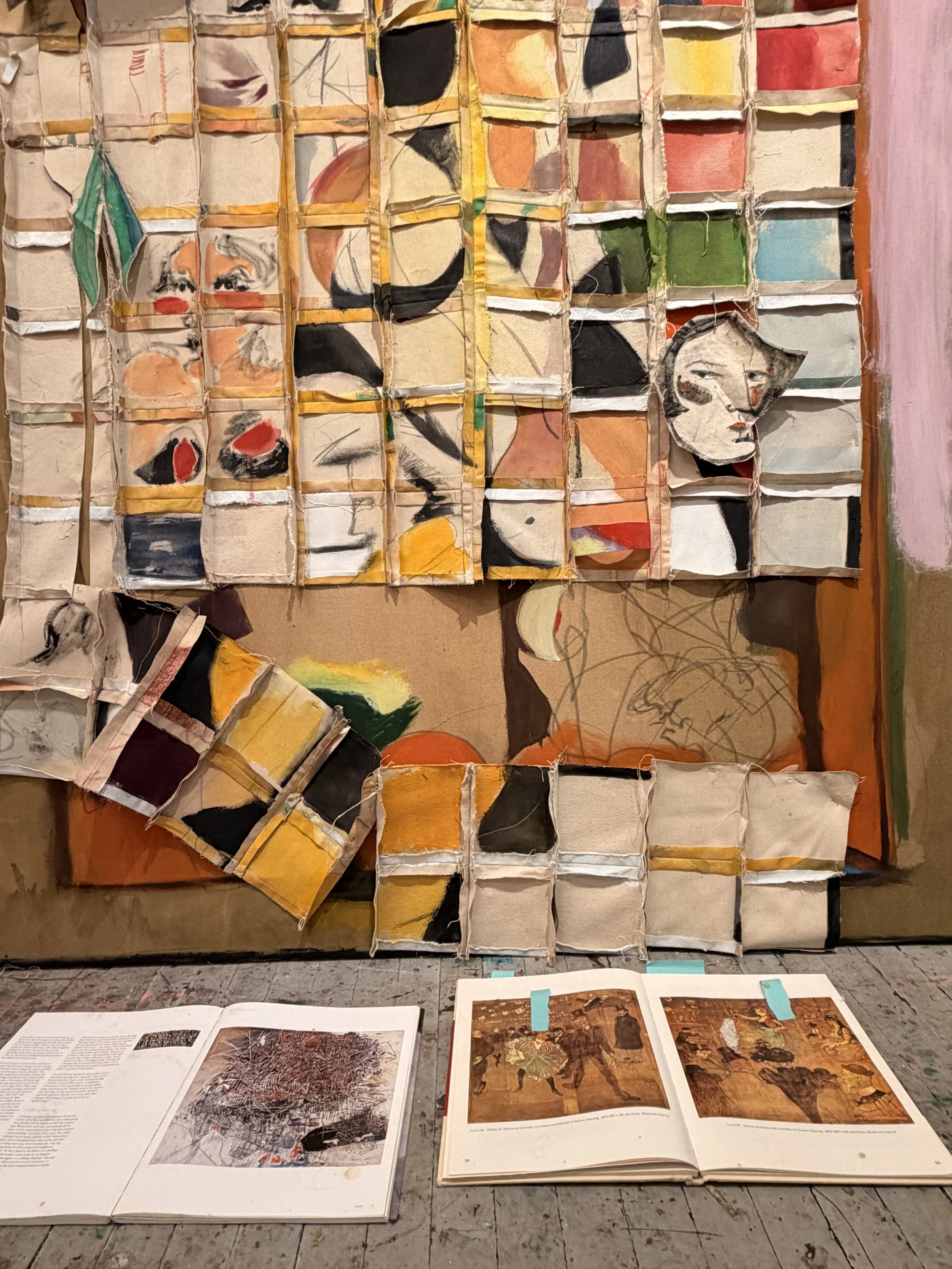
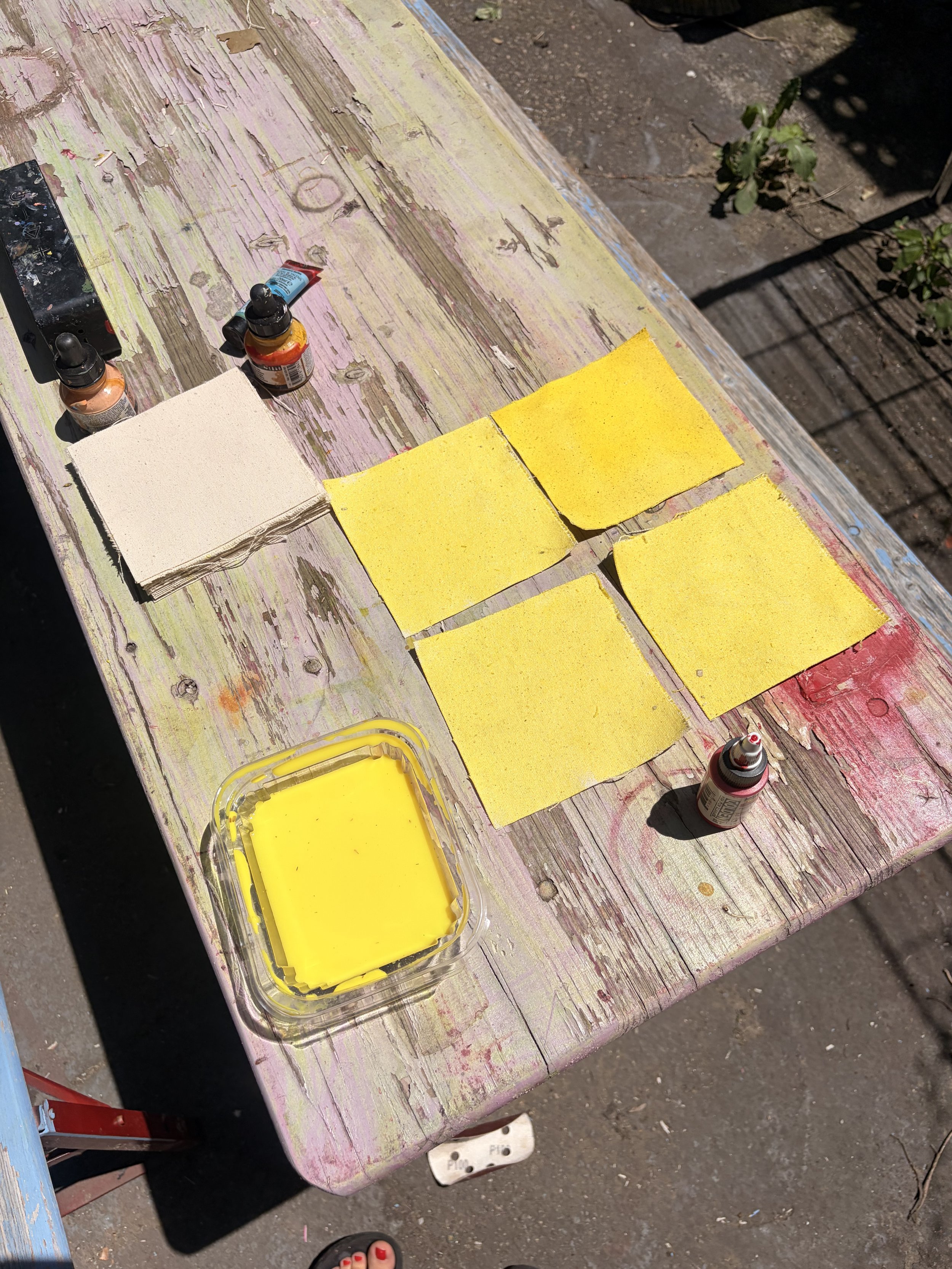
TURK: You took the sewing from your past because, something I read is that you said you couldn't really think of anything else to do. Now it's a massive characteristic of your work. When did it stop being a coping mechanism?
BARBEE: There was a while where, yes, it did stop being the coping mechanism, and it started becoming such a quiet space for my self-doubt to live in. Painting is very fast-paced for me, and it's very immediate. Sewing is the place where I can slow down and just reflect on what I just painted. There was a moment there, right when I moved to New York, where slowing down was kind of a strange thing.
It stopped being a coping mechanism and started becoming just a function, a way of mark making. Then it stopped being interesting and fun to me. It wasn't actually till this year that I went to this quilting class and started using the sewing machine. I'm still doing the hand embroidery stuff, but I feel like it's become a coping mechanism again. Just the process of building a quilt, or building this kind of surface for the painting, that requires cutting and ironing and measuring. It's a bit more of a logical type of creating. Now it's back to feeling like a safe space again. It's very odd.
TURK: I want to hear more about that. The internal part. What does it feel like when you're sitting there knowing, this is the vocabulary I've established that people spend money on, this is what my galleries want to see, but I'm bored, or I'm not stimulated, or I've lost the thing that originally fueled it? What goes through your mind in those moments?
BARBEE: I only recently got out of this as being somewhat of a burden. I am coming into the studio space with a story and a feeling. Something that I need to express and get out of my body. Each painting is unique to the place that I live, and the people that surround me, and the stories I'm building as I'm moving along with my life. Once I started making a whole bunch of paintings, over and over and over again, I had to go into myself and figure out: what story am I gonna tell with this painting?
There will always be this fight for a balance between demand and the stories I'm trying to send out into the world.
TURK: How much of your real life is in what we see?
BARBEE: It is mostly my real life. I'm always looking at images, though, and I'm always trying to emulate paintings I find interesting, or old. I love Toulouse-Lautrec because of those color palettes. I love that they're kind of dirty-looking. And R.B. Kitaj, of course. I love how smoky some of these older artists created their work. Sometimes I will use their figures, some of the beautiful, modelesque figures, as a way to create a self-portrait of myself.
And the thing is, all of the paintings are about my life, but I'm just trying to make them look like other people, so that nobody understands exactly what it's about. Sometimes it's about them, or it's about some silly story they heard me say, and I get kind of embarrassed about having too much of my personal life projected out there. I kind of disguise them into these characters that I find familiar in these older pieces of artwork.
TURK: Is it harder or easier to make when you're going through personal moments? Good, bad, ugly, self-becoming, whatever.
BARBEE: It really depends on what I'm going through, and also the people that I surround myself with. It's important to get critique from people. But it needs to be constructive. You need to surround yourself with people who are equally as delusional as you are when it comes to making work. Because if they think your work is the shit, you're gonna start believing it's the shit. Then everyone around you starts believing that too. There's just this magical thing that happens when you really surround yourself with people who believe in you.
There have been times where I've gone through really hard things and I haven't had those delusional people around me. Like right when I first went to New York. It was really hard because I didn't have a whole bunch of close friends here yet. I've gone through tough things this year, but I'm around all these people who are delusional about their own work. They are delusional about my work. We're just thriving here.
It's really what it is. There can be really good things that happen to you, really hard things that happen to you, but the way to make work, constantly, is just to have that community.
TURK: That's really incredible. And pretty rare. One of the things I noticed in your work: you're bringing back this kind of system. A more organizational element to how you're working. Tell me what that's doing for your work, and how that new structure feels.
BARBEE: You know, what just popped into my head: right when I started showing with Kohn Gallery, someone described my work as sculptural, which I felt like wasn't very true. But I wanted it to be true.
It stuck with me. I've always really liked the idea of more sculptural-type painting. Adding this new quilting element has made this more of a sculptural thing. Right now I'm in this explore mode, where I'm understanding what this fabric is doing by being bound together the way it is. How strong and moldable it is. Is this going to transform into a sculptural object on its own? There are a lot of question marks here, because I'm letting myself explore this play mode and seeing where it goes from here.
I'm really enjoying the way the light is hitting the quilt. It's creating all these new shadows that are adding a different type of line to the surface, one I had never thought about until recently. And I'm very free. I have to be free in the studio. I'm still making work that is more flat and narrative. Having this other thing on the side is exciting and playful.
TURK: What is that moment like, when you're experimenting, having this free play on one side of the studio, but you're still over here working on something a little closer to the practice you've been building for a long time? Are you looking over at that new area and letting it speak to you, following some inner guide?
BARBEE: Um... I wish there was a logical play-by-play of what I'm doing in the studio. I feel like in my practice, throughout my life, there's always been kind of the monster in the corner. The one I'm experimenting with. There was a while where I would focus on making ugly paintings. Then after the third ugly painting, there was a good painting. So there's always this kind of gremlin creature that's forming in the studio. As that one is growing, it's allowing the space for more of a breezier, open painting. It allows all of that junk in my head to release itself into this painting, so I can approach the other with a calmness.
“You need to surround yourself with people who are equally as delusional as you are when it comes to making work. Because if they think your work is the shit, you're gonna start believing it's the shit. Then everyone around you starts believing that too. There's just this magical thing that happens when you really surround yourself with people who believe in you.”
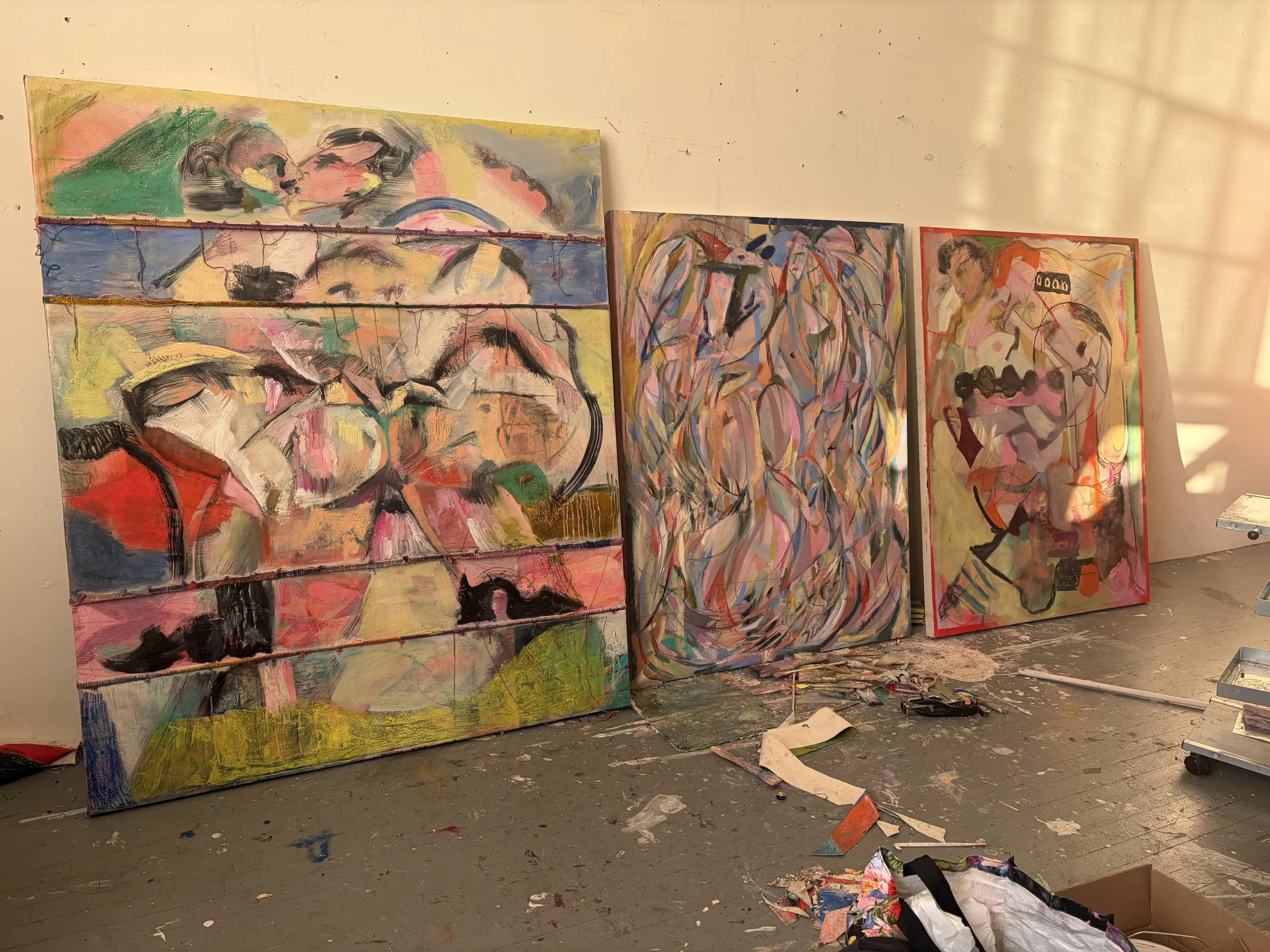
TURK: All of that happening in your head: are you following it, or is it pulling you, dragging you?
BARBEE: It is completely pulling me. I wish I had some sort of full control over it. The thing is, I have to just paint whatever is coming up within me. If I don't, if I just keep ignoring it, being like: next time or I have to stick to this sort of plan, then nothing will ever be created.
TURK: I don't want you to say anything you don't want to say, but I'm just gonna be blunt. How negative does the art market feel? Does it allow for this experimentation? Does it allow you to shift and make the things you feel called to make?
BARBEE: I was battling it way more when I first moved here. It's something I've heard gallerists talk about: they'll see how an artist's work shifts, and all that. But in the trajectory of some of my favorite artists' careers, none of them have made the same exact thing they made when they were in their twenties.
They have gone through these crazy experimental moments when there was a lull in the art market. I always go back to the women who have had these up-and-down painting careers. The way they'll have crazy abstract moments, or they'll have a landscape moment. If we look at the bigger picture, this might actually be a very interesting moment, before the painting completely skyrockets into something we had never seen. So I think about that a lot. I've made a lot of peace with the fact that I have to keep experimenting.
The best way to stay healthy, in our brains as artists and in our souls, is to just stay true to exactly what we want to make.
TURK: Exactly. To me, art is just people. People telling their stories. People trying to explain what it feels like to be a human being. What it means to be a human being is not sameness. It's not stagnation. It's not boxed in, not easily explainable. When I see an artist shift, I get so excited. I'm like, oh my God, this is incredible. It makes me feel more human. They were going through stuff too.
BARBEE: Yes! Exactly.
TURK: I'm not alone. Thank God.
BARBEE: No, it's true. People really want things to stay the same, because if they don't stay the same, then that's scary for people who... yeah. Don't stay the same. (laughs)
TURK: The cutting up of your old paintings seems really personal. Is that a loss? Are you mourning that older version? Or is it a way you can process your own life too, a radical acceptance of this truth, and then mold it into something new?
BARBEE: I used to feel sad about cutting them up. Because I take probably a thousand pictures of all of my paintings, just because my studio is small, and I need to feel like I can see it from a smaller lens. What does it look like if I was far away in a gallery space? I have so many photos of paintings that have had lives and that have had their deaths. I would go through them and become very sad about that. But I think that's just what life is.
(She laughs.) So deep. Where am I getting with it?
I've made a lot of peace with cutting them up throughout the years, because it's just a big release, you know? Some of these paintings, I'll be painting them about friendships, and maybe I'm not feeling the friendship anymore. Or I've painted a painting for too long, and it looks like a spring painting, but now it's the fall. So, cut it up. There's this moment where I have this disconnect with the work, and I have to just release that. Or there's a sadness that I have to just chop it up. It is very cathartic doing this.
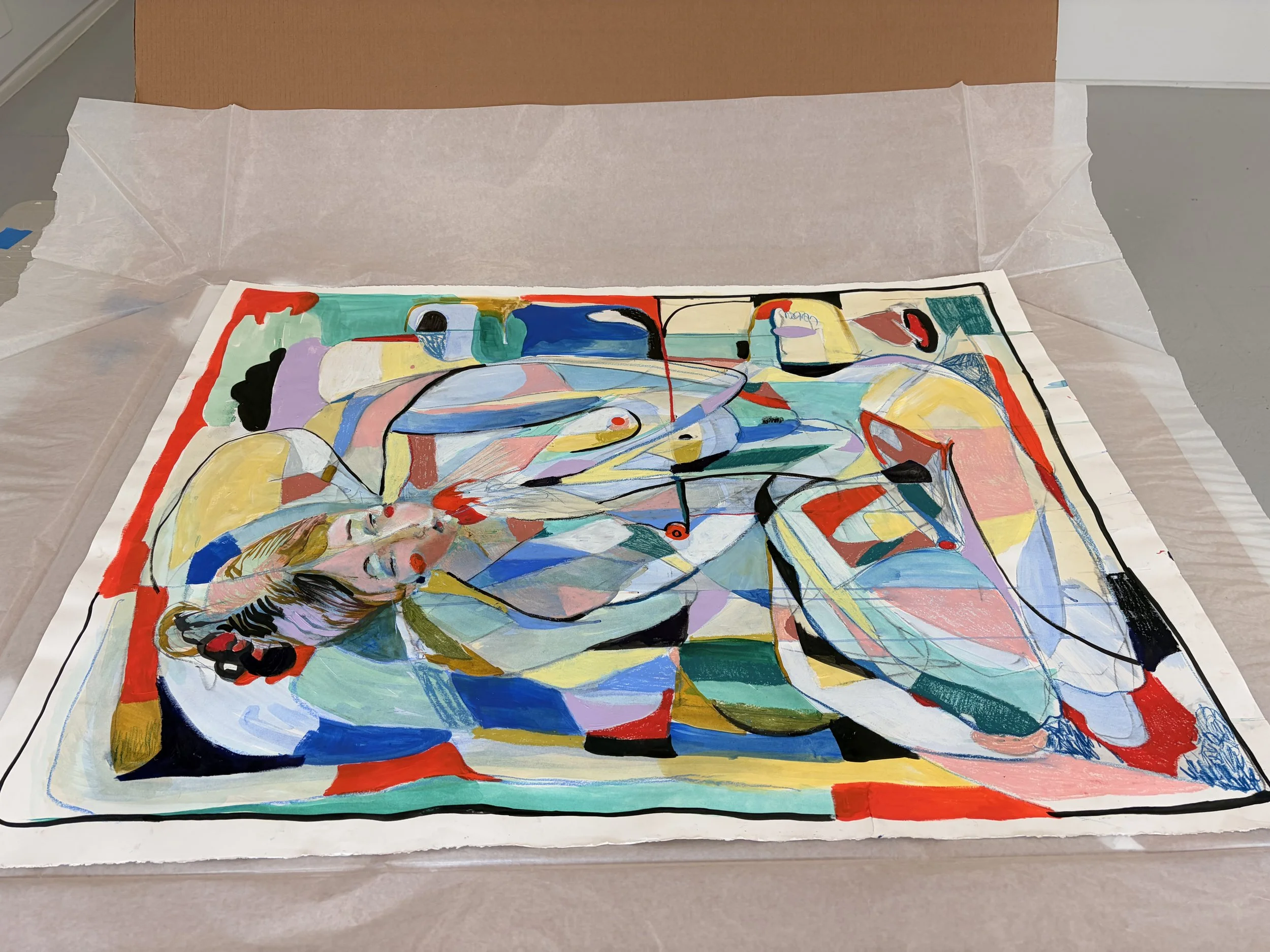
TURK: How much do you think about how you want people who see your work to feel it, or experience it, or understand it?
BARBEE: I think about paintings I really like when I go to a gallery space or a museum. I don't think too much about what individual people might think. I hope that people have the same feeling for my painting as I do about some of my favorite paintings that I come across. That feeling of, oh my God, this is really exciting, how did they make this? I want to just sit here and look at it all day long. I hope that's kind of what I'm doing in my work, and that's kind of the goal each time. I think every time I finish a painting and show it, I'm kind of like, all right, that was cool. Now I have to make a better one. I have to keep trying to chase that feeling for the viewer. I think that's gonna be a lifelong experience for me, because really I'm just trying to chase that in my own work, and trying to find some sort of connection to some of my favorite painters within my own painting.
TURK: We think about artists in terms of their end product. But I would imagine the artist's favorite part of their life is actually the process, not the end goal.
BARBEE: A hundred percent.
TURK: So what is your relationship like with a painting when it's about to leave the studio, or once it's left?
BARBEE: I miss them.
(We both laugh.)
BARBEE: I do. I'm like, someday I hope we can be together again and just give each other a hug. I see all of the paintings I've made as these sweet chapters of my life. I honor that version of me still. If I can see that version of me out in the open again, I would be so excited to see it.
There have been moments where I've been more sad about certain paintings leaving. I think it's because, being a painter, most of us have these relationships with these paintings. We're talking to the paintings. We're dancing with the paintings. We're there smoking with the paintings, you know? It's just seeing everything, and it's like a big mirror. Then that mirror gets sent off to a collector's house or a foundation. Then becomes a mirror to everybody else, and whatever projections they want to put onto it. Sometimes the mirror can be stronger, if it's made during a very big moment in my life. A moment where I'm accepting myself even more, or the painting has led me to do that kind of inner work.
TURK: When you went to the opening at Mrs. and were confronted by those paintings again, was that a positive experience?
BARBEE: It was positive, because... I was more interested in the way people were absorbing the work than in seeing the paintings hung up. People were understanding exactly what I was going through while making these pieces. I somehow communicated a feeling through this work. I am successfully communicating.
TURK: Have you ever run across, stumbled into, a painting that left and went somewhere else?
BARBEE: Yes, and it's so exciting.
TURK: Tell me about it.
BARBEE: It's so exciting, because the only way I've seen these paintings is in my dirty studio. I don't imagine the furniture that might be surrounding it, or the crown molding of the home or anything like that. I mean, I hope for crown molding.
(We both laugh.)
BARBEE: It's just such a fabulous feeling. I feel like a superstar when I see them out in the open. I got to go to the Green Family Art Foundation, and they had one of my dancer paintings up, above the couch. I was like, wow, this is in someone's home, and their children are gonna see this. They're gonna sit with it. They're having conversations around it. I think it gave me a lot more perspective on what my paintings are actually doing in the world. They have these whole different, fabulous lives. They've traveled the country, and throughout the world.
Then there's another time I got to see my work at the San Luis Obispo Museum of Art. Seeing it was like, wow, this is actually a really good painting.
(We both laugh.)
BARBEE: I don't think, in the moment when I've made a painting I’ve thought this is the best thing I've ever made. It takes several years of realizing: wow, I made that mark. How do I even think about doing that? It's a very funny feeling. It kind of feels like a stranger. Or an old friend I hadn't seen in so long, and they have a new tooth gem or something. Like, oh, you look different.
A new haircut or something. It was like, wow. You're a whole different person, but you're still the same.
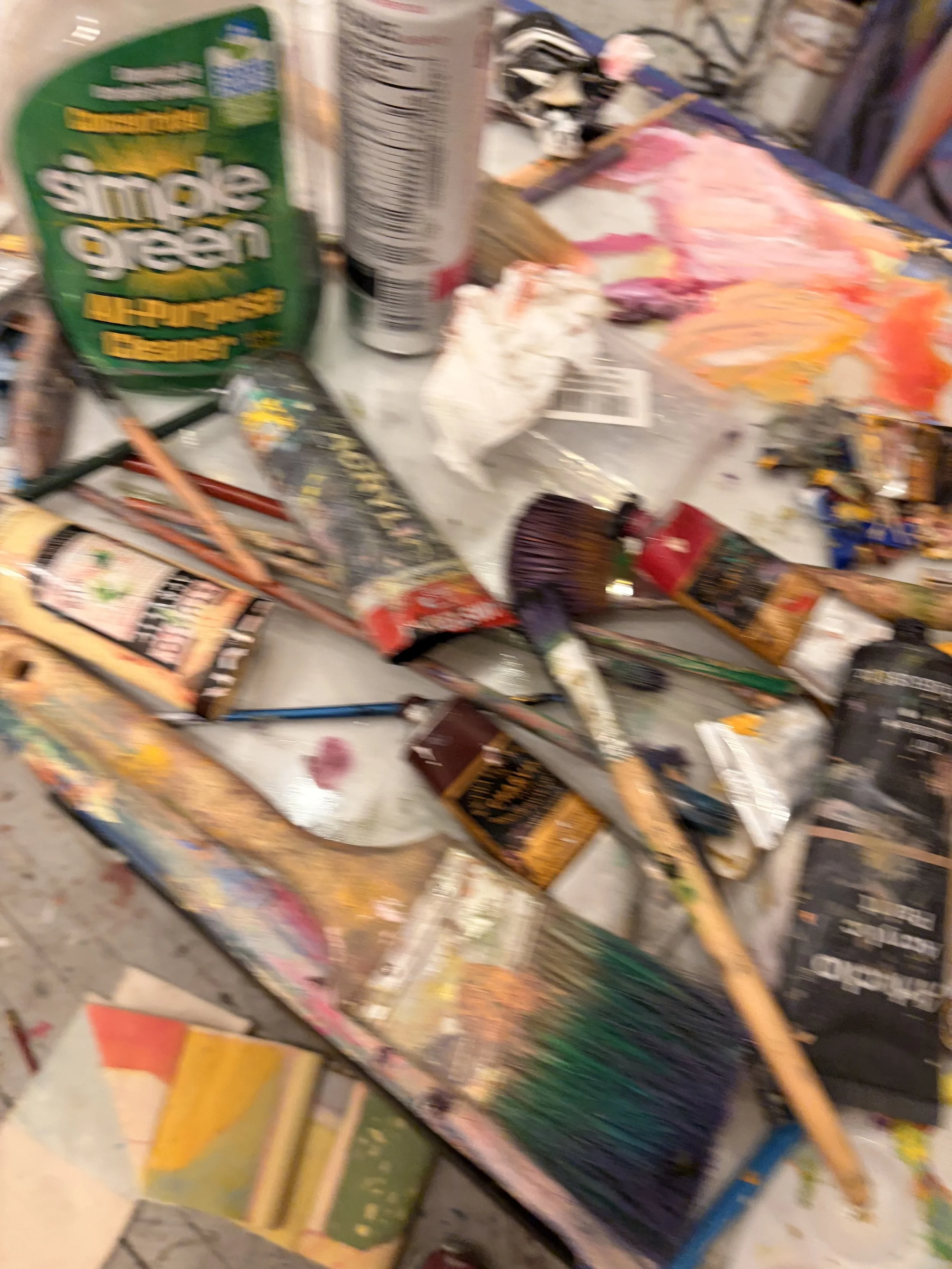
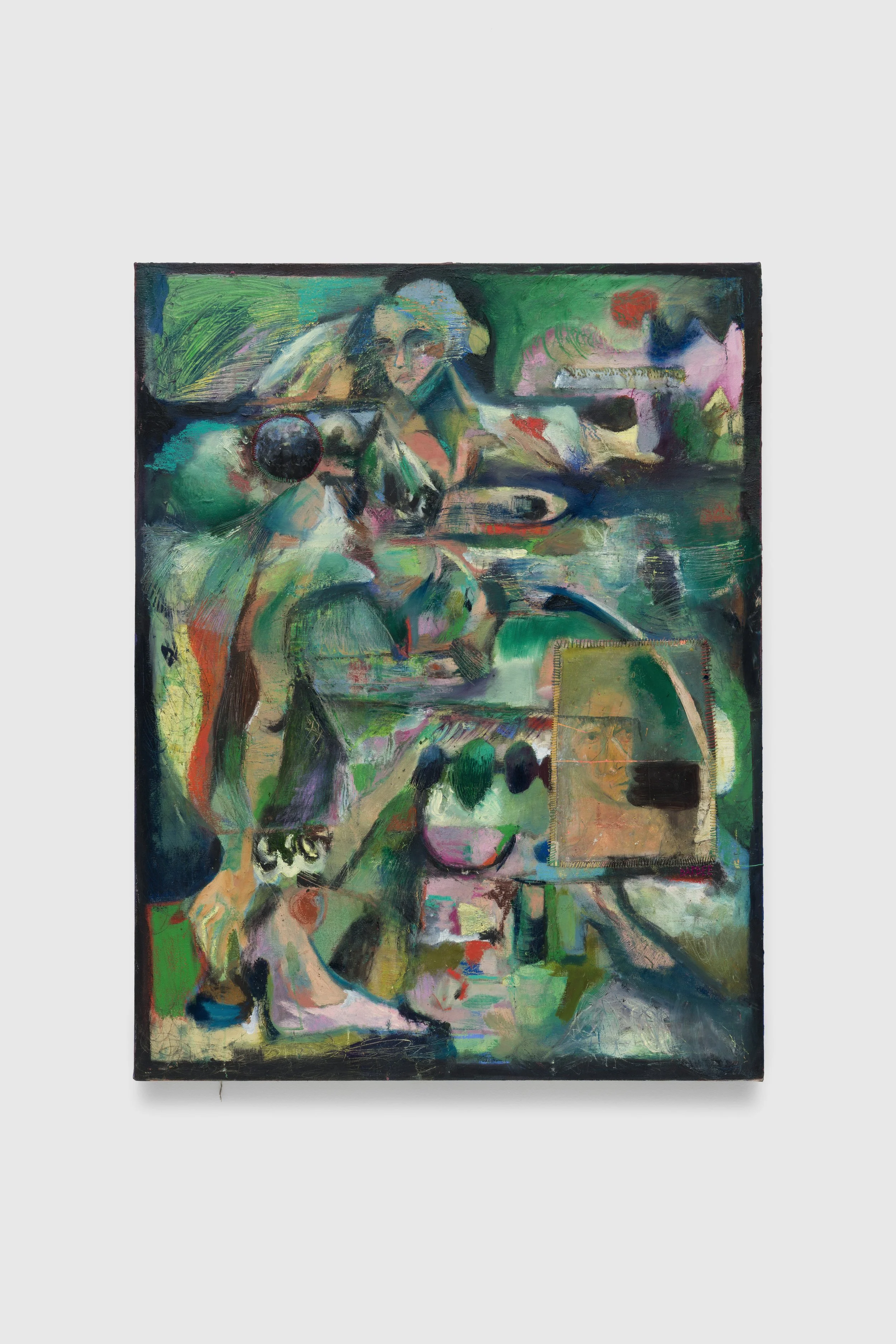
Photo by GC Photo
TURK: You've talked about some of these paintings being like a version of yourself. Sometimes it's really hard, as a person, to look back at these moments of change or growth or acceptance and think, God, I'm so glad I'm not that anymore. Or, I'm so proud of myself for these shifts. Or, wow, I can't believe I survived that.
BARBEE: Exactly.
TURK: And I think it's pretty cool to see something that, in your mind, you've kind of accepted as you, as a person, but then it's out there. People taking photos of it, people looking at it, people living with it. It's kind of beautiful to know that this version of yourself didn't die. It's out there, and there's so much life around it.
BARBEE: Right. It still has a heartbeat out there in the world. It's really beautiful. I love that my paintings are out there living their best life. It's kind of embarrassing too, because it's so vulnerable. It's just been in your kitchen this whole time. I was talking about this crazy love affair I had. It's kind of funny.
TURK: Any roadblocks right now?
BARBEE: I had one when I first moved here, but I think I’m past the roadblocks. In the studio, I’m really rocking and rolling right now.
TURK: How do you keep the faith, keep the hope, keep going?
BARBEE: The thing that keeps me hopeful is that people really, really do care about my work, and they care about me as a person. I absolutely adore all the advisors and gallerists who have just constantly been such a support over the years. But also my friends. Being around my friends—they are so helpful and they are so impressive. One of my friends just showed work at Hermès, my other friend just finished a first draft of her book, others are making movies right now, and they are just such inspirations. I think being kind, and keeping inspirational people in your circle is the only way I can keep hope.
TURK: Isn't that the truth. So, my last question: how do you feel as a painter right now? I don't mean some Art News headline. I just mean, how does it feel?
BARBEE: I will say that I don't know if anyone really understands what's happening in the art world.
(She laughs.)
BARBEE: My studio is in Ridgewood, and I'm just surrounded by artists. Seeing what they're making, hanging out and laughing in their studios. We're all just kind of keeping each other afloat right now. That is something I'm most inspired by at this very moment. That's the thing I'm most proud of right now, that I'm part of this community.
TURK: I think that's really huge.
BARBEE: Yeah. You know, this is a newer thing. It's within this last year that I've found this and built it up. It's really important to just kind of build it up, and make your life fun as much as possible.
TURK: Anything you want to say, anything I haven't asked, that you want to have out there?
BARBEE: This is a small thing, but another way I've kind of built my community here is I've started doing this radio DJing thing. It's completely community-centered. I'm not getting paid to do this. It's called 8 Ball Radio, and it's been around for a while. I've just been enjoying this idea of collage, and sounds together, and building narrative through radio. That feels connected to what I'm doing in the studio as well.
It’s nice to explore other mediums, and for me, having a side project only enhances what is happening in the studio.